
Discover Why Navratri Is the Most Powerful Time of the Year with Panchmukhi Jyotish. Learn how devotion, Goddess Durga worship, spiritual practices, and positive intentions can inspire growth, peace, and prosperity.
Navratri is one of the most spiritually significant festivals in Hindu tradition. Celebrated over nine nights and ten days, Navratri is dedicated to the worship of Goddess Durga and her nine divine forms, known as the Nav Durga. For millions of devotees, these sacred days represent an opportunity to pray, reflect, remove negativity, and invite peace, strength, prosperity, and positive energy into life.
At Panchmukhi Jyotish, Navratri is viewed as an important period for spiritual practices, self-reflection, devotion, and traditional remedies. The festival encourages people to connect with divine energy while developing discipline and positive intentions.
What Makes Navratri So Powerful?
The word Navratri means “nine nights.” Each night is traditionally dedicated to a particular manifestation of Goddess Durga. Devotees worship these forms with prayers, fasting, meditation, mantras, devotional songs, and other spiritual practices.
The nine forms of Maa Durga are traditionally known as:
- Maa Shailputri
- Maa Brahmacharini
- Maa Chandraghanta
- Maa Kushmanda
- Maa Skandamata
- Maa Katyayani
- Maa Kalaratri
- Maa Mahagauri
- Maa Siddhidatri
Each form carries different traditional symbolism and spiritual significance. Together, they represent different dimensions of Shakti, or divine feminine energy.
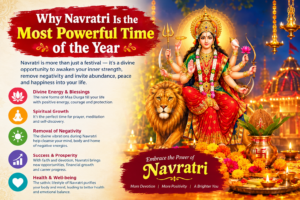
Navratri and the Power of Shakti
Shakti represents divine energy, strength, creativity, and transformation. Goddess Durga is traditionally worshipped as a powerful manifestation of this divine feminine energy.
Navratri reminds devotees that strength is not only physical. Inner courage, wisdom, patience, determination, compassion, and self-control are also important forms of strength.
During Navratri, devotees may use prayer and meditation to develop these qualities. The festival can therefore become a period of personal reflection and spiritual renewal.
According to the traditions followed by Panchmukhi Jyotish, sincere devotion and positive intentions can make spiritual practices more meaningful during sacred occasions such as Navratri.
Navratri and Removal of Negativity
One of the central themes of Navratri is the victory of good over negative forces. The story of Goddess Durga’s victory over the demon Mahishasura symbolizes the triumph of divine righteousness over destructive forces.
For devotees, this symbolism can be applied to everyday life. Negative habits, fear, anger, unnecessary stress, unhealthy attachments, and pessimistic thinking can all be areas for personal reflection.
Navratri provides an opportunity to identify habits that no longer serve us and consciously develop more positive patterns.
Simple practices such as meditation, prayer, reading spiritual texts, maintaining cleanliness, and avoiding unnecessary negativity can help create a peaceful mindset.
The Importance of Fasting During Navratri
Fasting is a traditional practice observed by many devotees during Navratri. However, the form of fasting differs from person to person and according to regional and family traditions.
Some devotees avoid grains, certain foods, or particular ingredients, while others observe a more limited fast. Some may choose to consume only fruits or specific fasting foods.
The deeper purpose of fasting is often understood as discipline and self-control rather than simply avoiding food. It can encourage devotees to become more mindful of their habits and daily choices.
Anyone with dietary, medical, or other health considerations should follow appropriate professional advice rather than adopting a restrictive fast simply because it is traditional.
The Role of Mantras During Navratri
Mantra chanting is another important spiritual practice associated with Navratri. Devotees may chant prayers dedicated to Maa Durga according to their personal tradition.
One commonly recited mantra is:
“Om Dum Durgaye Namah.”
Mantra practice can be combined with quiet meditation and prayer. Repeating a mantra with concentration may help create a calm and focused environment.
At Panchmukhi Jyotish, spiritual practices are encouraged with an emphasis on sincerity and consistency. A short prayer performed with genuine devotion can be meaningful even when a person has limited time.
Navratri and Positive Energy at Home
Many families use Navratri as an opportunity to clean and organize their homes. Traditionally, cleanliness is considered an important part of preparing for worship.
A clean Puja space can be decorated with flowers, lamps, traditional symbols, and an image or idol of Goddess Durga.
Lighting a diya, offering flowers, reciting prayers, and performing Aarti are common practices.
The purpose is not necessarily to create an elaborate setup. Even a simple Navratri Puja performed respectfully can provide an opportunity for family members to pause their daily routines and spend time in prayer.
Navratri and Professional Life
The spiritual significance of Navratri can also be incorporated into professional life. Business owners and employees may perform a small Puja at their workplace, provided it is conducted safely and respectfully.
Some businesses perform prayers for prosperity, stability, and success during Navratri. Important business documents, accounting books, or work-related items may traditionally be placed near the Puja area as a symbolic offering of professional efforts.
However, spiritual practices work alongside practical efforts. Planning, ethical conduct, financial discipline, communication, and responsible decision-making remain essential to professional development.
Panchmukhi Jyotish encourages people to view spiritual traditions as a way of developing positive intentions while continuing to take practical steps toward their goals.
Navratri and Relationships
Navratri can also be a meaningful period for improving relationships. The festival encourages qualities such as compassion, patience, respect, and emotional balance.
Families can use the occasion to spend more time together, participate in Aarti, visit temples, prepare traditional food, and celebrate cultural traditions.
For people experiencing relationship difficulties, Navratri can provide an opportunity for self-reflection. Rather than focusing only on changing another person, devotees can consider their own communication, expectations, reactions, and behavior.
Prayer and spiritual reflection may support a positive mindset while practical communication remains essential for resolving relationship challenges.
Navratri and Financial Prosperity
Many devotees worship Goddess Lakshmi during particular Navratri traditions and seek blessings for abundance and prosperity. The festival is often associated with positive intentions regarding financial stability and material well-being.
Traditional remedies may include lighting lamps, offering flowers, maintaining a clean worship area, and performing prayers according to one’s family tradition.
However, financial prosperity also requires practical action. Budgeting, saving, responsible investment, skill development, and careful decision-making are important aspects of financial stability.
Spiritual practices can complement these efforts by encouraging discipline, gratitude, and positive intentions.
Navratri as a Time for Self-Transformation
Perhaps one of the most meaningful aspects of Navratri is its emphasis on transformation.
The nine nights provide an extended period during which devotees can focus on spiritual practices and personal improvement. Instead of treating Navratri only as a festival, people can use the occasion to establish constructive habits.
For example, someone may decide to:
- Begin a daily meditation practice
- Reduce unnecessary negativity
- Spend more time with family
- Practice gratitude
- Improve personal discipline
- Read spiritual literature
- Visit a temple
- Perform regular prayer
- Give charity according to personal capacity
- Focus on healthier routines
Small changes made consistently can have greater practical value than temporary efforts.
Why Navratri Is Considered Spiritually Significant
Navratri combines several important elements of Hindu spiritual tradition: worship, fasting, prayer, meditation, devotion, cultural celebration, and reflection.
The nine forms of Goddess Durga provide different symbolic representations of strength and divine energy. The festival’s central message of overcoming darkness and negativity continues to hold deep meaning for devotees.
The significance of Navratri is therefore not limited to rituals. It can also inspire people to develop courage, discipline, faith, kindness, and a stronger sense of purpose.
How Panchmukhi Jyotish Can Support Your Spiritual Journey
Panchmukhi Jyotish focuses on traditional astrology and spiritual guidance for people seeking greater understanding of their personal circumstances.
During Navratri, devotees may wish to learn about traditional Puja practices, mantras, spiritual remedies, auspicious practices, and ways to incorporate positive habits into everyday life.
Why Navratri Is the Most Powerful Time of the Year is explained by Panchmukhi Jyotish through devotion, Maa Durga worship, fasting, mantra chanting, spiritual practices, positive energy, and transformation. Astrology and spirituality can be approached as tools for reflection and guidance, while important life decisions should also consider practical circumstances and reliable information.
Conclusion
Navratri is considered one of the most powerful spiritual periods of the year because it brings together devotion, prayer, discipline, reflection, and the worship of Shakti. The nine forms of Goddess Durga symbolize different qualities of divine strength, wisdom, courage, and transformation.
Whether you celebrate Navratri through fasting, Puja, mantra chanting, meditation, temple visits, Aarti, or simple personal prayer, the most important element is sincere intention.