
How to Perform Shardiya Navratri Puja at Home with Panchmukhi Jyotish guidance: clean the Puja space, worship Maa Durga, light diyas, offer flowers, chant mantras, perform Aarti, and distribute Prasad.
Shardiya Navratri is one of the most auspicious and spiritually significant festivals celebrated in Hindu tradition. Dedicated to Maa Durga and her nine divine forms, Shardiya Navratri provides devotees with an opportunity to pray, meditate, perform traditional rituals, and seek blessings for peace, strength, prosperity, and positive energy.
Performing Navratri Puja at home does not always require an elaborate arrangement. With a clean Puja space, traditional offerings, devotion, and sincere prayers, families can create a peaceful spiritual atmosphere. Panchmukhi Jyotish offers traditional guidance for devotees who wish to understand the spiritual and astrological significance of Navratri and its rituals.
What Is Shardiya Navratri?
Shardiya Navratri is the autumn Navratri traditionally observed during the Hindu month of Ashwin. It is celebrated for nine nights and ten days, with each day associated with one of the nine forms of Maa Durga.
The nine forms are traditionally known as:
- Maa Shailputri
- Maa Brahmacharini
- Maa Chandraghanta
- Maa Kushmanda
- Maa Skandamata
- Maa Katyayani
- Maa Kalaratri
- Maa Mahagauri
- Maa Siddhidatri
Devotees worship these forms through prayers, fasting, meditation, mantra chanting, Aarti, and other traditional practices.
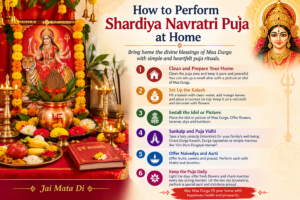
Clean Your Home Before Puja
Before beginning Shardiya Navratri Puja, clean the home and especially the area where the Puja will take place. Traditional Hindu practices place importance on cleanliness before worship.
Remove unnecessary items from the Puja area and clean the floor and surrounding space. You may decorate the area with flowers, Rangoli, mango leaves, torans, or other traditional decorations.
A clean environment can also help create a peaceful atmosphere for prayer and meditation.
Choose a Suitable Puja Space
Select a clean and quiet area of your home for the Puja. Ideally, the space should allow family members to sit comfortably and participate in the rituals.
Place a small wooden platform or Chowki in the selected area and cover it with a clean red or yellow cloth. You can decorate the Chowki with flowers and a traditional Rangoli.
Place an image or idol of Maa Durga respectfully on the platform.
Prepare the Navratri Puja Samagri
Keep all necessary Puja materials ready before beginning the ceremony. Common items include:
- Maa Durga idol or picture
- Clean red or yellow cloth
- Kalash
- Coconut
- Mango leaves
- Kumkum
- Haldi
- Akshat or rice
- Fresh flowers
- Garland
- Incense sticks
- Diya
- Ghee or oil
- Fruits
- Sweets
- Water
- Panchamrit, if desired
- Betel leaves and nuts, according to tradition
The exact items may vary according to regional customs and family traditions.
Perform Kalash Sthapana
Kalash Sthapana is an important part of many Navratri traditions. Place a clean Kalash filled with water on the Puja platform. Mango leaves can be arranged around its opening, and a coconut may be placed on top.
The Kalash is traditionally considered a symbol of auspiciousness, abundance, and divine presence.
If you are following a specific family or regional tradition, perform Kalash Sthapana according to those customs.
Begin with Lord Ganesha
Many Hindu Puja traditions begin with worship of Lord Ganesha. Before starting the main Navratri Puja, offer prayers to Lord Ganesha for an auspicious beginning.
Light a diya and offer flowers, kumkum, and other customary offerings. You may chant a simple Ganesh mantra according to your tradition.
The purpose is to begin the ceremony peacefully and with a focused mind.
Worship Maa Durga
After Ganesh Puja, begin the main worship of Maa Durga. Light the diya and incense and offer flowers to the Goddess.
Apply kumkum and offer Akshat as part of the traditional Puja. You can offer fruits and sweets as Prasad.
Devotees may chant:
“Om Dum Durgaye Namah.”
Repeat the mantra with concentration and devotion. Family members can participate in chanting according to their comfort and tradition.
Recite Durga Prayers
During Shardiya Navratri, devotees may recite different prayers and sacred texts dedicated to Maa Durga.
Depending on your tradition and available time, you may recite Durga Chalisa, Durga Saptashati selections, Devi Kavach, or other devotional prayers.
If you are not familiar with these texts, a simple prayer from the heart is also meaningful. The central purpose of worship is sincere devotion.
Offer Bhog to Maa Durga
Prepare a simple Bhog according to your family’s tradition and offer it to Maa Durga.
Fruits, sweets, coconut, and other vegetarian offerings are commonly used. During Navratri, many devotees also prepare special fasting foods.
After offering the Bhog, allow some time for prayer before distributing the food as Prasad among family members.
Observe Navratri Fasting
Fasting is traditionally observed by many devotees during Navratri. However, fasting practices vary widely.
Some people avoid grains and certain foods, while others eat fruits, milk, or specific fasting foods. Some devotees observe a partial fast rather than a complete fast.
Fasting should be practiced responsibly. Individuals with medical conditions, dietary restrictions, pregnancy, or other health considerations should follow appropriate professional guidance rather than adopting restrictive fasting practices.
The spiritual purpose of fasting can include discipline, mindfulness, and self-control.
Perform Maa Durga Aarti
Aarti is an important part of Navratri worship. After completing the Puja and offerings, light the Aarti lamp and perform Aarti of Maa Durga.
Family members can participate by singing the traditional Aarti together.
After Aarti, bow respectfully before Maa Durga and offer your prayers. You may pray for strength, wisdom, peace, family harmony, and positive intentions.
Keep a Positive Environment
Navratri is traditionally associated with positivity, devotion, and spiritual discipline. During these nine days, devotees may consciously try to reduce unnecessary arguments, anger, negative thinking, and harmful habits.
Spending time in prayer and meditation can encourage a peaceful mindset.
Families can also use Navratri as an opportunity to spend quality time together, participate in devotional activities, and teach children about cultural and spiritual traditions.
Navratri Remedies with Panchmukhi Jyotish
Many devotees follow traditional remedies during Navratri for spiritual well-being and positive intentions. These may include lighting a diya regularly, offering red flowers to Maa Durga, chanting Durga mantras, maintaining cleanliness, helping those in need, and performing charity according to personal capacity.
Panchmukhi Jyotish can provide traditional astrological and spiritual guidance for people interested in understanding Navratri rituals, Puja practices, planetary influences, and devotional remedies.
Such practices are best approached with faith and consistency rather than as guaranteed solutions to specific problems.
Kanya Puja During Navratri
Kanya Puja, also known as Kanjak Puja in some regions, is traditionally performed toward the end of Navratri. Young girls are respectfully invited, worshipped symbolically as manifestations of feminine divine energy, and offered food and gifts.
The specific age range, number of girls, rituals, and customs vary according to regional traditions.
If your family traditionally observes Kanya Puja, you can follow the customs passed down through your household or seek guidance from a knowledgeable priest.
Maintain Safety During Home Puja
While performing Navratri Puja, safety should always be considered. Keep diyas and incense away from curtains, paper, electrical equipment, and other flammable objects.
Children should be supervised around lamps and fire. Ensure that incense smoke does not create discomfort for family members.
If you are using a Kalash or other water-filled vessels, place them securely to avoid accidental spills.
Conclusion
Shardiya Navratri is a beautiful opportunity to connect with Maa Durga through devotion, prayer, meditation, fasting, and traditional rituals. Performing Puja at Office can be simple and meaningful when done with cleanliness, respect, and sincere intention.
Begin by cleaning your home and preparing a dedicated Puja space. Arrange the idol or image of Maa Durga, prepare the necessary Puja materials, perform Kalash Sthapana according to your tradition, worship Lord Ganesha, offer prayers to Maa Durga, chant mantras, offer Bhog, perform Aarti, and distribute Prasad.
Navratri is not only a time for rituals but also an opportunity for personal reflection. Use these sacred days to develop patience, discipline, gratitude, compassion, and positive habits.
With traditional guidance from Panchmukhi Jyotish, devotees can explore the spiritual significance of Shardiya Navratri while following practices suitable for their family and cultural traditions.
May Maa Durga bless you and your family with strength, wisdom, peace, happiness, and prosperity during Shardiya Navratri.