
Learn How to Perform Navratri Puja at Office with Panchmukhi Jyotish guidance. Clean the space, worship Maa Durga, light diyas, chant mantras, offer Prasad, and seek prosperity. Navratri is one of the most spiritually significant festivals in Hindu tradition. It is dedicated to the worship of Maa Durga and her nine divine forms, known as the Nav Durga. While many people perform Navratri Puja at home, worshipping the Goddess at the workplace can also create a peaceful and positive environment. An office Navratri Puja can be a meaningful way to seek divine blessings for professional growth, harmony, prosperity, and success.
At Panchmukhi Jyotish, we believe that traditional spiritual practices can be incorporated into daily professional life with sincerity and devotion. A simple and properly organized Navratri Puja at the office can bring employees together while creating an atmosphere of positivity and gratitude.
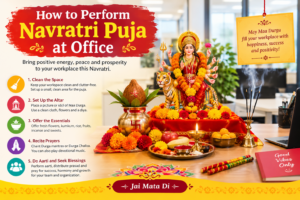
Why Perform Navratri Puja at the Office?
An office is where people spend a considerable portion of their day. It is therefore natural to want the workplace to feel peaceful, harmonious, and productive. Navratri Puja provides an opportunity for employees and business owners to come together and offer prayers to Maa Durga.
The nine days of Navratri symbolize the victory of good over negative forces. Performing Puja during this period is traditionally associated with seeking blessings for strength, wisdom, prosperity, protection, and success.
An office Puja can also encourage teamwork and strengthen relationships among colleagues. When employees participate together in prayers and celebrations, it can create a sense of unity and belonging.
Choose a Clean and Suitable Place
The first step in performing Navratri Puja at an office is selecting an appropriate place. Choose a clean, quiet, and well-maintained area where the Puja can be performed without disturbing regular office activities.
If possible, select a location that receives sufficient natural light and has enough space for employees to participate comfortably. Clean the area thoroughly before arranging the Puja setup.
A small table or platform can be decorated with a clean red or yellow cloth. These colors are traditionally associated with devotion and auspiciousness.
Place an Idol or Image of Maa Durga
Place an idol or picture of Maa Durga on the decorated platform. The image should be clean and respectfully positioned.
You can decorate the area with fresh flowers, garlands, leaves, and simple traditional decorations. If the office has limited space, there is no need for an elaborate arrangement. A simple and respectful setup is sufficient.
The main purpose of the Puja is devotion and sincerity rather than expensive decorations.
Prepare the Puja Samagri
Before beginning the Puja, keep all necessary materials ready. Common Navratri Puja items may include:
- Maa Durga idol or picture
- Clean cloth
- Kalash
- Coconut
- Mango leaves
- Kumkum
- Haldi
- Akshat or rice
- Fresh flowers
- Garland
- Incense sticks
- Diya
- Ghee or oil
- Fruits
- Sweets
- Betel leaves and nuts, if traditionally used
- Water
- Panchamrit, if desired
The exact requirements can vary according to family traditions, regional customs, and the type of Puja being performed.
Establish the Kalash
Kalash Sthapana is an important ritual associated with Navratri. A clean Kalash can be filled with water and decorated with traditional items. Mango leaves may be placed around its opening, with a coconut positioned on top.
The Kalash is traditionally regarded as a symbol of auspiciousness, abundance, and divine presence. If you are performing a simple office Puja, the Kalash can be established respectfully according to your customary practices.
For detailed ritual guidance, consulting a knowledgeable priest or experienced astrologer can help ensure that the ceremony follows your preferred tradition.
Begin with Ganesh Puja
Before worshipping Maa Durga, many Hindu traditions begin with prayers to Lord Ganesha. This is traditionally done to seek blessings for an auspicious beginning and the smooth completion of the ceremony.
Light a diya and offer flowers, kumkum, and other customary offerings. Chant a simple Ganesh mantra or prayer according to your tradition.
Employees can participate by maintaining a peaceful and respectful atmosphere.
Worship Maa Durga
After Ganesh Puja, begin the main Navratri worship. Light the diya and incense and offer flowers to Maa Durga.
You may apply kumkum and offer akshat as part of the traditional worship. Fruits and sweets can also be offered as Prasad.
A simple mantra such as “Om Dum Durgaye Namah” may be recited with devotion. Employees who are comfortable chanting can participate together.
You can also recite Durga Chalisa, Durga Saptashati selections, or other prayers according to the office’s customary practice and available time.
Perform Aarti
Aarti is one of the most important parts of the Puja. Light the Aarti lamp and respectfully perform the Aarti of Maa Durga.
Employees can join in singing the traditional Aarti. The atmosphere should remain peaceful, respectful, and inclusive.
After Aarti, distribute Prasad among employees and guests. This provides an opportunity for everyone to participate in the blessings associated with the celebration.
Office Navratri Puja and Business Prosperity
Many business owners choose to perform Navratri Puja with the intention of seeking blessings for business stability, professional opportunities, and financial prosperity.
During the Puja, business owners may place important office documents, accounting books, or business-related items respectfully near the Puja area. This practice can symbolize offering one’s professional efforts to the Divine.
At Panchmukhi Jyotish, spiritual traditions are approached as practices of faith and devotion. Alongside prayer, practical planning, ethical business conduct, responsible financial management, and good relationships remain important parts of professional success.
Maintain a Positive Office Environment
Navratri is also a good time to encourage positive relationships among employees. The celebration does not need to be limited to the Puja ceremony.
Offices can organize simple activities such as devotional music, traditional dress days, cultural programs, or a small Prasad distribution. Such activities can help employees celebrate together while respecting different schedules and responsibilities.
It is important to keep the celebration voluntary and considerate of employees with different personal beliefs and practices.
What Should Be Avoided During Office Puja?
While conducting Navratri Puja at the workplace, certain practical considerations are important.
Avoid creating excessive noise or obstructing important office operations. Keep candles, diyas, and incense away from flammable materials and electronic equipment. Follow the building’s fire-safety rules.
Food and Prasad should also be handled hygienically. If the office has employees with dietary restrictions or allergies, provide suitable alternatives.
Most importantly, avoid treating the Puja as merely a decorative event. The central purpose should be prayer, gratitude, and respectful celebration.
Best Time for Office Navratri Puja
The ideal time for Navratri Puja depends on the particular day, location, and tradition being followed. Some families and organizations prefer performing Puja during an auspicious Muhurat, while others choose a convenient daytime period.
If you want to follow a specific Muhurat, it is advisable to check the local Panchang for your city and the particular Navratri date. A knowledgeable astrologer can also help identify an appropriate time according to traditional practices.
Navratri Puja with Panchmukhi Jyotish
Navratri provides an opportunity to bring spirituality, gratitude, and positive intentions into professional life. Whether your office is large or small, the Puja can be performed in a simple and respectful manner.
Panchmukhi Jyotish can guide devotees who wish to understand traditional astrological and spiritual practices related to auspicious occasions, Puja rituals, planetary influences, and personal growth.
Remember that the essence of Navratri worship is devotion. A simple Puja performed with a sincere heart can be more meaningful than an elaborate ceremony without genuine faith.
Conclusion
Performing Navratri Puja at the office can be a beautiful way to celebrate Maa Durga while bringing employees and business associates together. Begin by cleaning and preparing a suitable Puja area, arrange an idol or image of Maa Durga, establish the Kalash if desired, perform Ganesh Puja, worship Maa Durga, recite appropriate prayers, perform Aarti, and distribute Prasad.
The celebration should be conducted respectfully, safely, and inclusively. Along with spiritual practices, maintaining ethical work, positive communication, careful planning, and responsible decision-making can contribute to a healthy professional environment.
During the sacred days of Navratri, seek the blessings of Maa Durga for strength, wisdom, peace, and prosperity. With devotion and positive intentions, an office Navratri Puja can become a meaningful annual tradition for everyone.
Panchmukhi Jyotish wishes you and your workplace a peaceful, prospe